
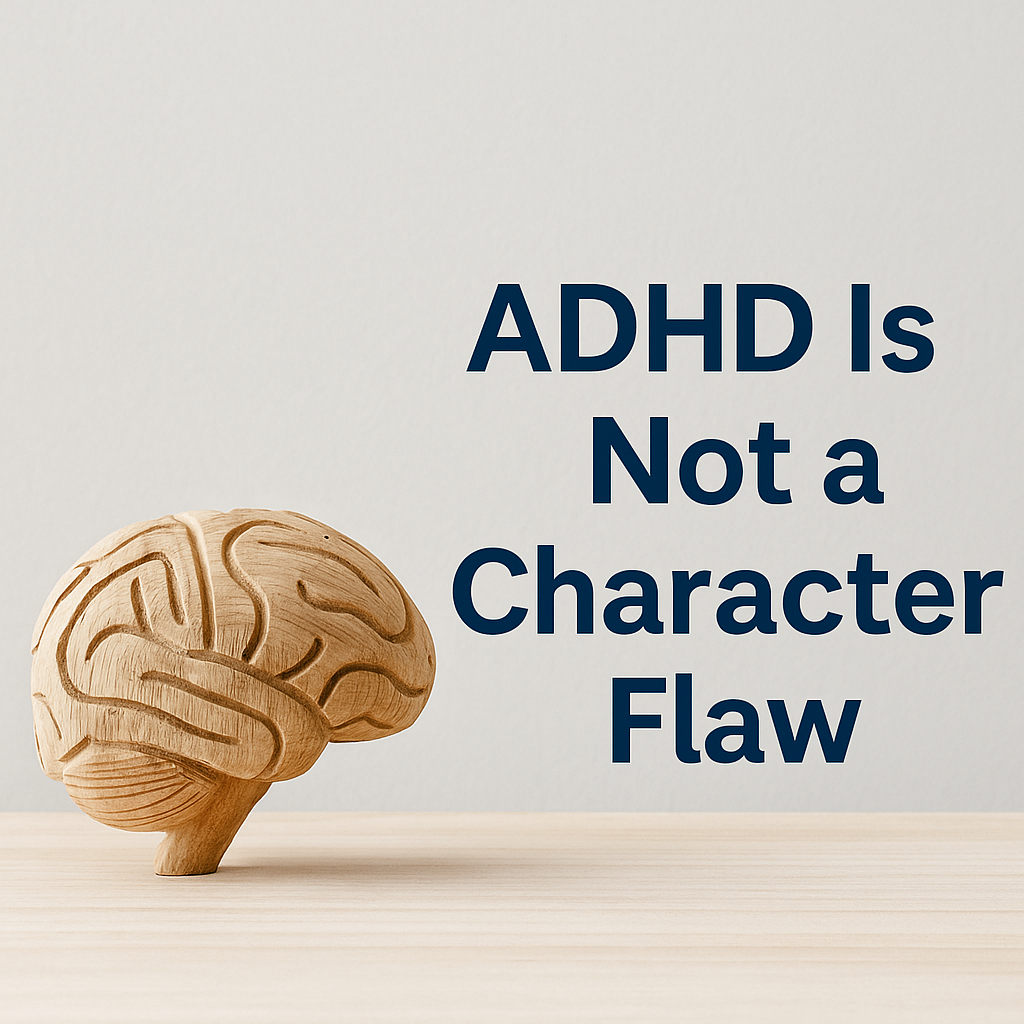
ADHD has always suffered from an image problem. People imagine a child bouncing around a classroom, or an adult scrolling their phone instead of working. Yet the real story is far deeper and far more scientific. ADHD is a neurodevelopmental condition with strong genetic underpinnings, affecting attention, emotional regulation, motivation, impulse control, and working memory. These are brain-based functions, not moral choices.
One of the most persistent myths is that ADHD is simply a motivational deficit. Patients tell me they were scolded throughout childhood—lazy, careless, messy, forgetful—despite trying their best. Punishment does not treat a neurological condition. It only teaches shame.
The idea that ADHD disappears at adulthood is another relic of older thinking. Many adults carry their symptoms into university, work, and relationships. They describe feeling “inconsistent,” capable of brilliance one day and paralysed the next. This inconsistency creates a lifelong narrative of underachievement and self-blame. When an adult realises that a treatable condition explains decades of struggle, their relief is profound.
ADHD is often invisible. Inattentive presentations do not look disruptive; they look quiet, dreamy, or disengaged. These individuals are frequently overlooked, especially high-ability students who compensate until demands exceed capacity. Later in life, they present with anxiety or depression—the downstream effect of years spent fighting an unseen current.
Emotional regulation is another neglected part of ADHD. The same circuits governing attention also coordinate emotional response. People with ADHD feel emotions intensely and shift gears rapidly. They are not “overreacting.” Their brains are wired to respond differently.
The science behind ADHD treatment is robust. Stimulants improve core symptoms in the majority of patients. Non-stimulants offer alternatives when stimulants are unsuitable. Therapy teaches structure, time management, and executive skills. Lifestyle factors—sleep, routine, exercise—reinforce stability. Treatment is safe, evidence-based, and life-changing.
Parents of children with ADHD often carry unnecessary guilt. It’s important to state clearly: ADHD is not caused by permissive parenting, too much sugar, or too many electronics. Genetics plays a significant role, and early support improves long-term outcome. Blame helps no one. Accurate understanding helps everyone.
What matters most is that ADHD is identifiable and treatable. Assessment provides clarity. Treatment reduces impairment. People with ADHD are not defined by their symptoms—they are often creative, intuitive, energetic, and capable of extraordinary focus when engaged. The goal is not to eliminate their traits but to equip them with the tools to thrive.
Understanding ADHD shifts the conversation from fault to function. It is not about discipline or character. It is about recognising how the brain works and supporting it effectively. For those living with symptoms, the most important message is simple: ADHD is real, but so is recovery.